10 Nov 2026
Decoding the Black Box: Why Data Provenance and Traceability Have Become Essential Enterprise Business Requirements
By Diwakar Chandra Gour
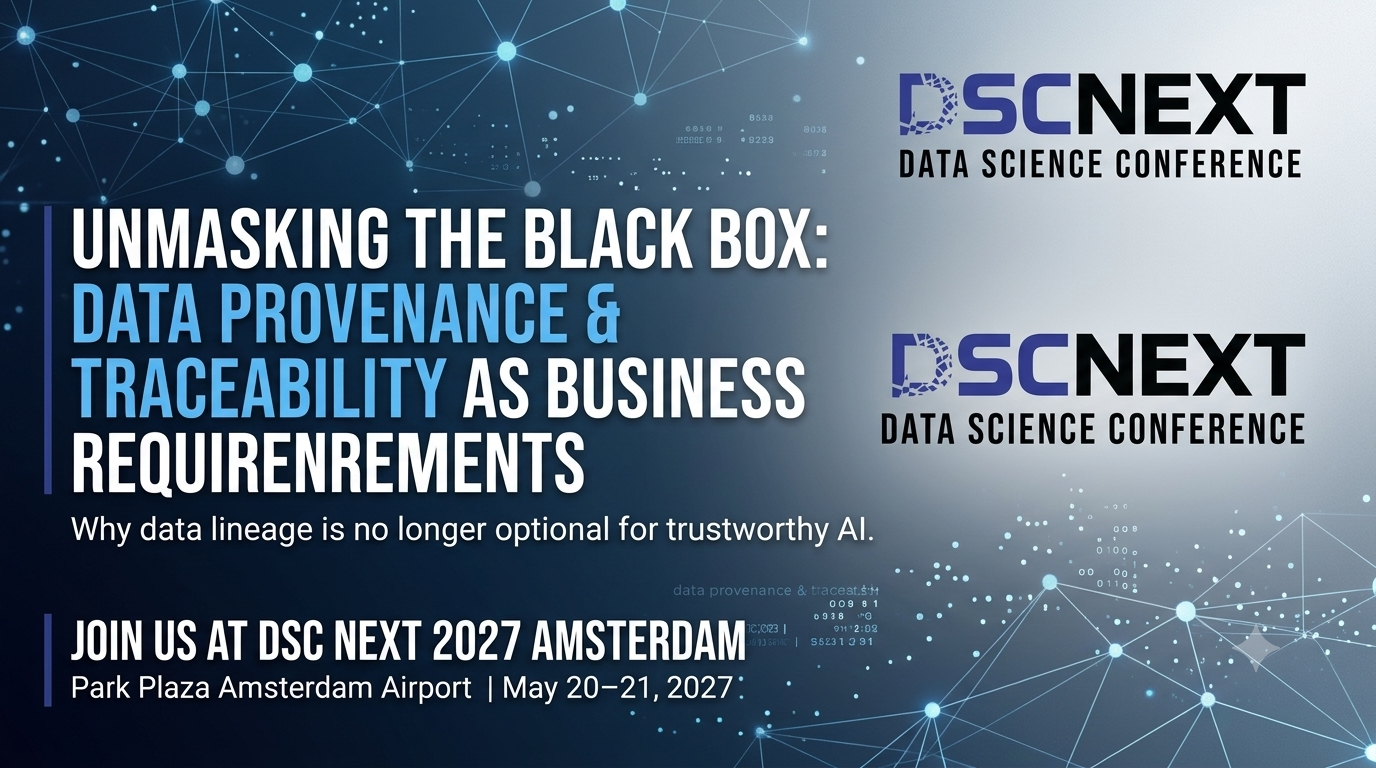
Decoding the Black Box: Why Data Provenance and Traceability Have Become Essential Enterprise Business Requirements
As artificial intelligence, automated pipelines, and advanced machine learning models transition from experimental projects to core operational drivers, modern organizations face a mounting challenge. It is no longer enough for an analytics model or an autonomous agent to deliver a result—leadership, regulators, and consumers are increasingly asking a fundamental question: How did we get here?
Enter data provenance and traceability. Once treated as technical metadata tasks tucked away in the corner of data engineering departments, tracking the origin, movement, and transformation of data has officially evolved into a critical business requirement.
The Shift from Convenience to Accountability
In the early days of big data, the primary focus was accumulation and velocity. Organizations rushed to centralize data lakes, feed disparate sources into machine learning models, and deploy automated decisions at scale.
However, regulatory pressures (such as GDPR and emerging global AI frameworks), the rise of synthetic data, and the deployment of autonomous AI agents have completely altered the landscape. When a model makes a high-stakes prediction—whether approving a loan, adjusting supply chain logistics, or diagnosing a patient—enterprises must be able to audit the exact lineage of the data involved.
Without robust provenance and traceability, companies face severe vulnerabilities:
The "Black Box" Liability: Inability to explain automated outputs during compliance audits or security incidents.
Poisoned Pipelines: Difficulty identifying where corrupt, biased, or synthetic data infiltrated the modeling pipeline.
Eroding Customer Trust: Consumers and enterprise clients increasingly demand transparency regarding how their corporate and personal data shapes AI outcomes.
Traceability as a Strategic Business Driver
Forward-thinking organizations no longer view data lineage as a defensive compliance check. Instead, they are leveraging traceability as a competitive advantage:
Uncompromised AI Governance: By maintaining a clear, immutable record of data transformations, organizations can confidently deploy generative AI and automated systems without fearing regulatory penalties or unexpected hallucinations born from unverified inputs.
Accelerated Incident Response: When data anomalies occur, traceability allows engineering teams to trace back through pipeline dependencies in minutes rather than weeks, dramatically reducing downtime and financial loss.
Cross-Departmental Alignment: A universal standard of data provenance bridges the gap between data scientists, legal teams, and business leaders, ensuring everyone speaks the same language regarding risk and data health.
Join the Conversation at DSC Next 2027 Amsterdam
As enterprises worldwide race to build trustworthy, scalable, and transparent data architectures, the dialogue around data provenance is taking center stage.
If you want to stay ahead of these paradigm shifts, connect with global industry pioneers, and explore real-world blueprints for data governance, join us at the upcoming DSC Next 2027 (3rd Edition)!
Dates: May 20–21, 2027
Location: Park Plaza Amsterdam Airport, Amsterdam, Netherlands
What to Expect: Keynotes, multidisciplinary panel discussions, hands-on learning, and deep-dives into data governance, sovereign AI, and advanced machine learning strategies from leading global experts.
Whether you are a data leader, engineer, or executive looking to future-proof your organization, DSC Next 2027 is the premier global platform to shape the future of data science and AI innovation.